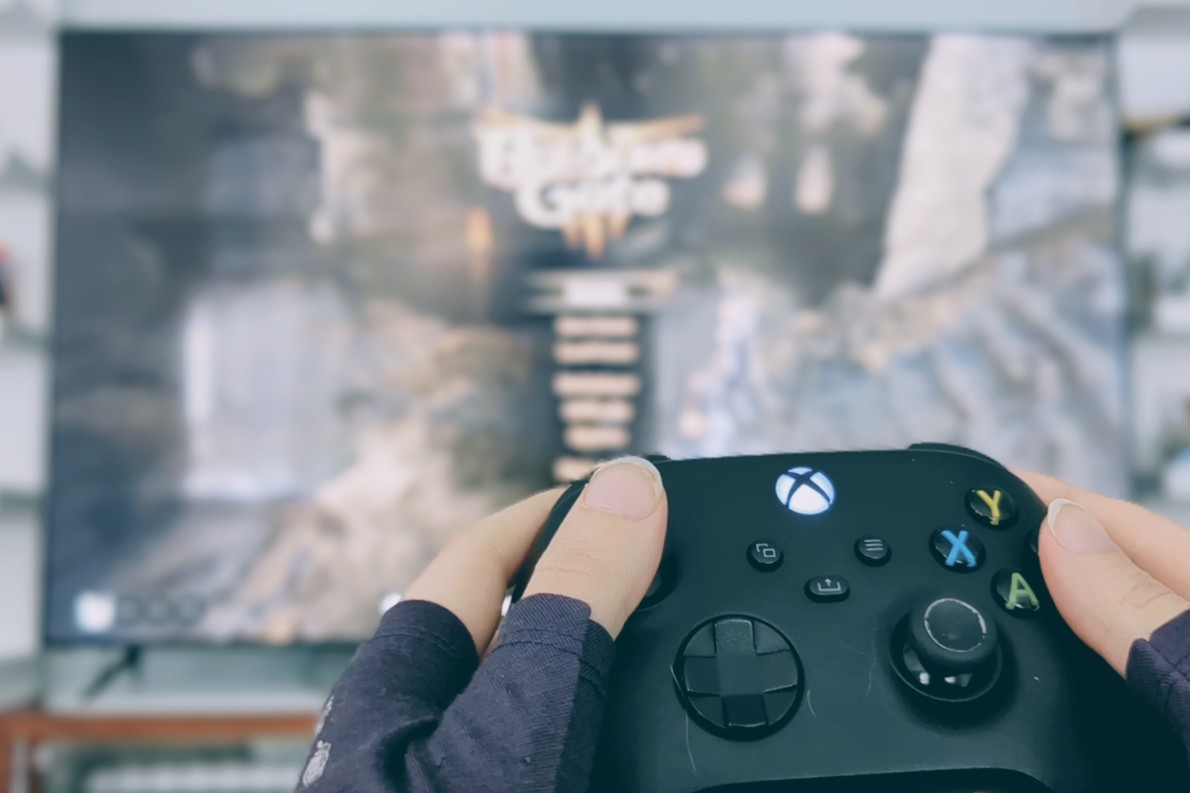
I sink beneath the blankets on the couch, waiting patiently for the Xbox to load my last save in Baldur’s Gate 3. When my blood-spattered druid comes on screen, she’s standing among the corpses of slain enemies scattered across the floor of a shop in the city. A little vague on how we got there and where we’re going next, I open the journal menu to jog my memory on whether I was partway through a quest or had just finished one.
Below the list of main story objectives—a mere three left to complete in Act 3—one of my many active side quests is flagged with an update. We’re in the middle of something. Further down, a few companion side quests are still on my to-do list, too.
Nothing is stopping me from finishing the game. All the quests are interwoven anyway, so most of those side quests will probably get wrapped up along the way. Yet I avoid any objective that looks too related to the main story. Something compels me to wrap up every loose end before I go into the finale.
As I look down the list of unfinished tasks, I remember a recent conversation with a friend about my struggle to get back to work on my manuscript.
“I think ultimately there’s some subconscious thing about if I finish it, then I have to do all the scary work of trying to get it published, so it’s easier to keep it in progress,” I messaged her. Even the thought of the upcoming battle against rejections—first with agents, then publishers—drains my emotional battery.
The story has been stuck just before the start of Act 3 for over a year. Whenever I get stuck, I look for problems in what came just before.
First Act 3 didn’t feel like it fit with the rest of the story. It was a world-building issue, fixed by developing the setting more. I had to go back to the beginning to leave myself hints at where to weave it back in during the next revision.
Then I got stuck in a plot hole for a long time. The solution, when it finally presented itself, was an easy one. It only changed some earlier dialogue. Most importantly, the main events of Act 3 could proceed smoothly—for me, at least. My characters? Not so much.
Still, I avoided starting Act 3. I wasn’t ready to reach the ending. I went back to the beginning, telling myself reading through the whole story so far would prepare me to write what had to happen. Really, I was looking for another problem to solve.
Of course I found one. This might be my third rewrite of the story, but it’s still a second draft.
Unfortunately, what I found wasn’t the side quest I was hoping for to put off tending to the main plot. The start of Act 3 has a big job to do. It’s the emotional moment the story has been leading to from the first chapter. It’s not some shock-value twist to spring on the reader. They’ve been waiting for it, leaning in to the pull. Preparing for heartbreak, even if they don’t know exactly how it will play out.
And it all hinges on one relationship between two characters. If the reader doesn’t believe in the relationship, that moment won’t hurt. And the whole third act will collapse.
That relationship takes a lot of care to craft. To mask loyalty and trust with constant antagonism and lingering resentment. To turn a platonic relationship built on obligation and debts that can’t really be paid into something like the bond between siblings.
The weight of that responsibility makes me pause. It’s not something a second draft will get right. I won’t know if the relationship doesn’t work and the heartbreak falls flat until a critique group gets their hands on a complete draft. And I can’t go back and fix things leading up to this moment until I experience it for myself as it unravels on the page.
The beginning is free from that kind of pressure. It’s full of possibilities and curiosity, not expectations and inevitabilities.
Even Baldur’s Gate is like that. It’s why I sometimes sneak over to a different save file, one where I play a sorcerer/bard who’s still messing around in act 1—but making faster progress because I know where to go now.
So what if I tried something different? What if I started writing Act 3 in a fresh, blank document? The temptation to scroll back up to the past might not be as strong if there’s nothing there to see. I could write the end as I see it playing out rather than worry it won’t be there if I don’t polish the beginning and middle a hundred times first.
It’s going to be messy and humbling, but I can’t reach the next draft without finishing this one.


 The AJSWITZY Project
Don’t just lurk, say something! The comment section is open for your mildly unhinged opinions.